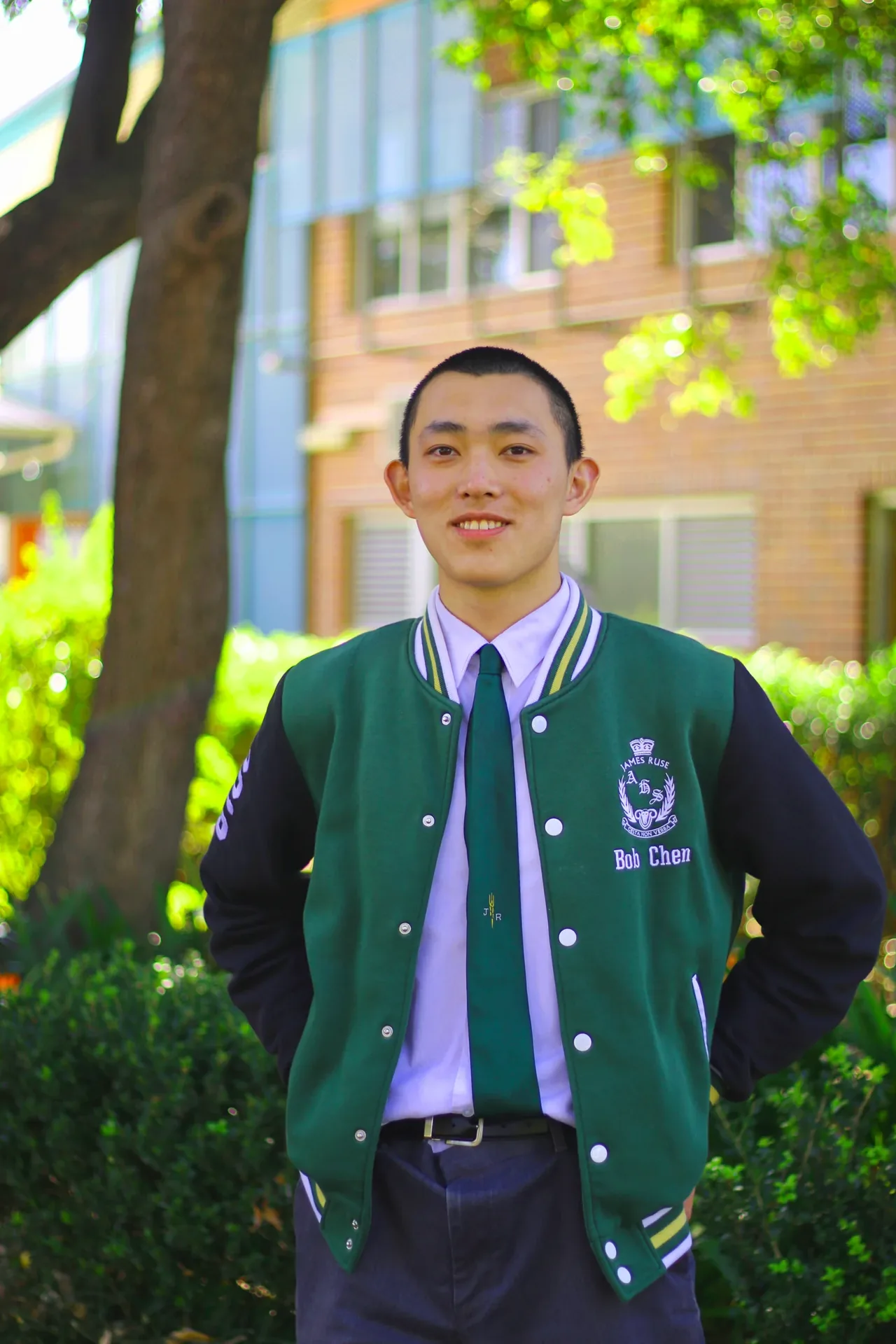
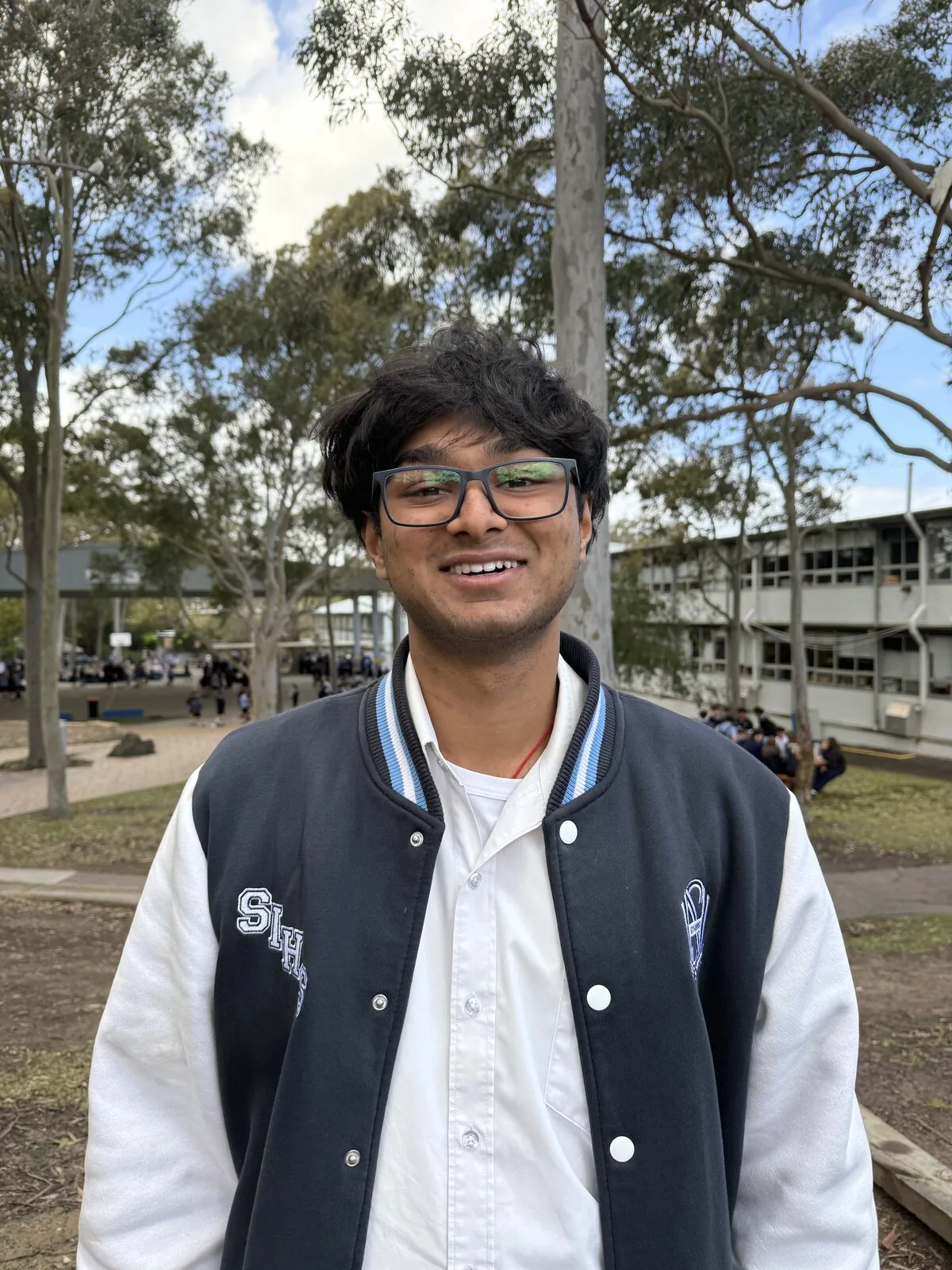
He has a talent for breaking down every concept into digestible pieces.
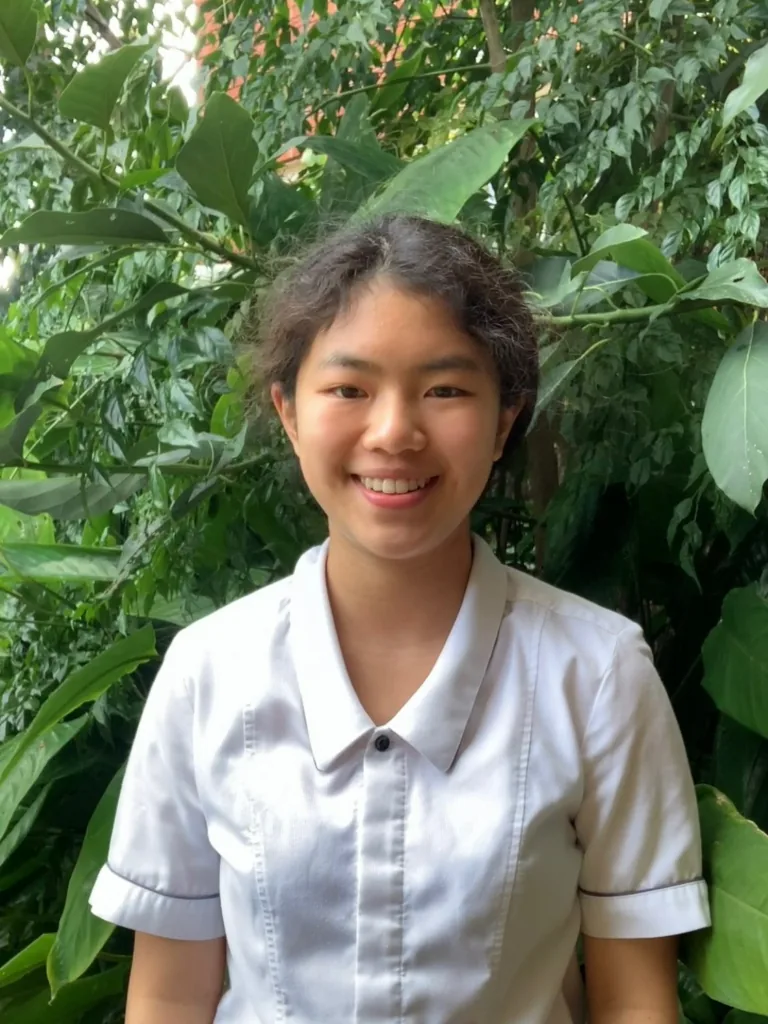
Jade finished Year 11 Chemistry on 49%. She needed a way to understand the difficult ideas, rather than just work through more textbook questions. Bob broke the concepts down, helped outside class and focused exam practice on her weak spots. She went on to achieve a Band 6 in HSC Chemistry.
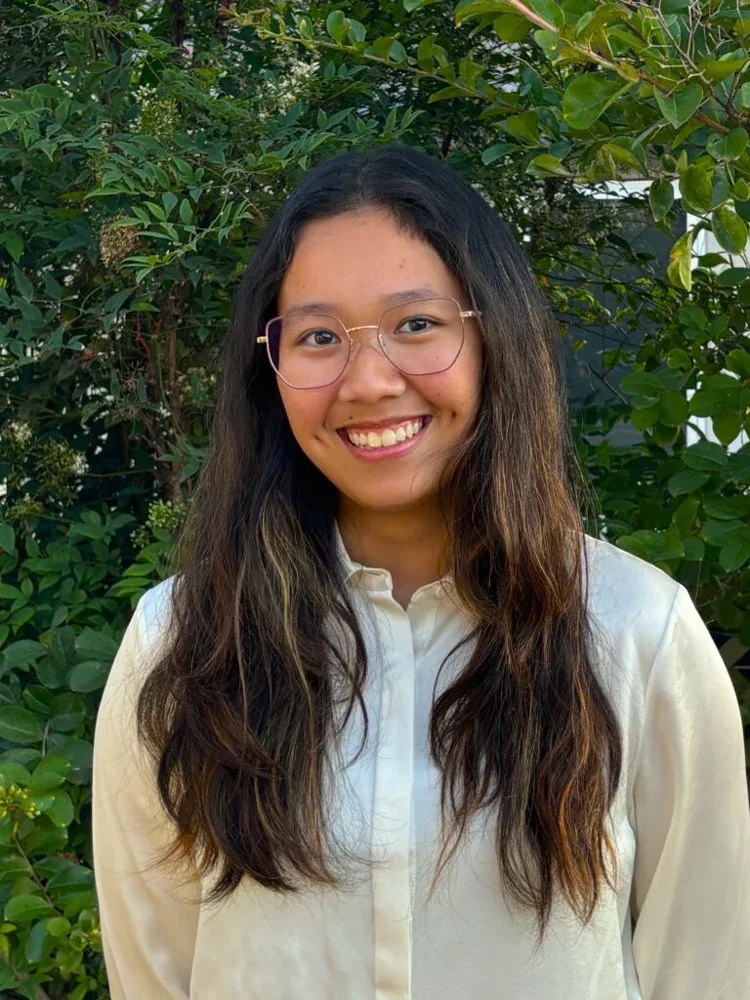
Kirsten’s marks had been falling, and she was beginning to dread physics. The more personal lessons gave her room to ask questions and work at her own pace. Challenging practice and help outside class made her feel more prepared. She went from 56% in Chemistry trials to 91 in the HSC, with 92 in Physics too.
But before I topped James Ruse Physics, I didn’t even want to tell my mum my marks.
Classroom footage · original scanned exam
This was me in Year 10.
Ouch.
But there was something I was even worse at than taking selfies.
Science.
Cause, I hadn’t been doing so well.
Fuck. 50th in the cohort.
I hated science.
I studied. I memorised. I practised.
Yet I still used the wrong formulas. I had to guess in exams.
I could never crack the top ranks or get 90%+.
I had lost control.
I didn’t want to tell my mum my marks.
So I knew something had to change.
I went on to achieve
1st in Ruse Physics.1st in Ruse Physics.
Physics state rank.Physics state rank.
99.85 ATAR.99.85 ATAR.
USYD Med.USYD Med.
This was me in Year 10.
Ouch.
But there was something I was even worse at than taking selfies.
Science.
Cause, I hadn’t been doing so well.
Fuck. 50th in the cohort.
I hated science.
I studied. I memorised. I practised.
Yet I still used the wrong formulas. I had to guess in exams.
I could never crack the top ranks or get 90%+.
I had lost control.
I didn’t want to tell my mum my marks.
So I knew something had to change.
I went on to achieve
1st in Ruse Physics.
Physics state rank.
99.85 ATAR.
USYD Med.
So, how didwe do it?
Explained intuitively and from scratch
Salt in water. Let’s look inside one grain.
Salt in water. Let’s look inside one grain.
Its white surface looks smooth. Keep zooming in.
That surface is made of tiny Na⁺ and Cl⁻ ions.
The ions form a repeating lattice.
Let’s follow this Na⁺ ion at the edge.
Oxygen pulls water’s shared electrons closer. Its end is slightly negative; the hydrogen ends are slightly positive.
The negative oxygen ends face Na⁺. Gold dots show their attraction to the ion.
Water pulls outwards. The surrounding Cl⁻ ions hold Na⁺ in the lattice.
Na⁺ separates from the lattice, with water molecules around it.
That’s Na⁺(aq): a sodium ion surrounded by water.
2.Exam-style homework
You know how in school you learn
But then, in the exam, you getBut then,in the exam,you get
What if you got questions like this in your homework every week?
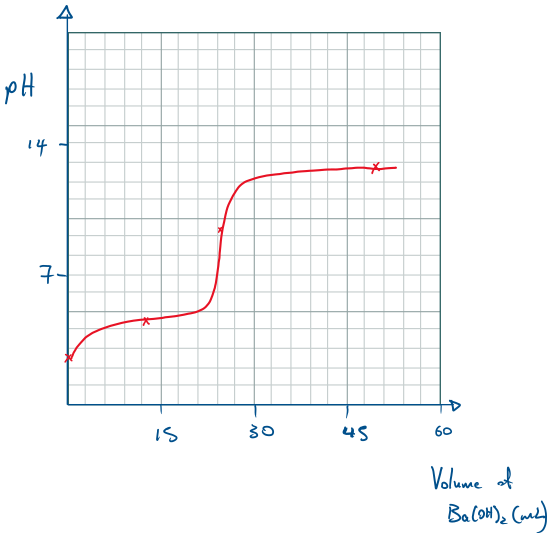
A man begins to titrate 65.7mL of 0.270M acetic acid against 0.350M Ba(OH)2. Acetic acid has a pKa of 4.76. Draw the pH graph, ensuring you label the following points:
The initial pH (2 marks)
The pH at equivalence point (3 marks)
The pH at the optimal buffer point (2 marks)
The pH after 50mL of Ba(OH)2 has been added (2 marks)
And every question had step-by-step worked solutions.
a) The initial pH (2 marks)
ANSWER
Step 1: Thinking
Acetic acid is a weak acid and its dissociation in water can be represented as below:
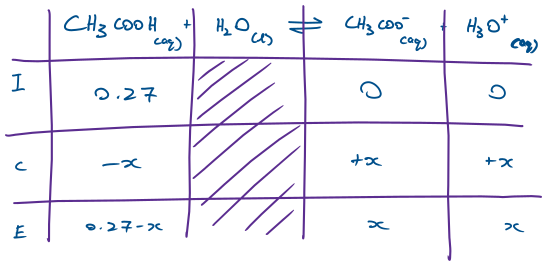
Step 2: Draw up ICE table
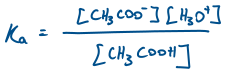
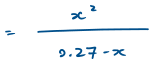
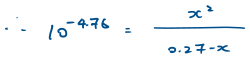
Step 3: Substitute into the Ka expression
The acid dissociation constant, Ka, can be calculated from the pKa value:
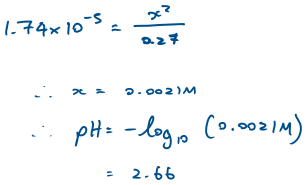
Make the small change assumption
Expand allShow less
a) The initial pH (2 marks)
ANSWER
Step 1: Thinking
Acetic acid is a weak acid and its dissociation in water can be represented as below:
Step 2: Draw up ICE table
Step 3: Substitute into the Ka expression
The acid dissociation constant, Ka, can be calculated from the pKa value:
Make the small change assumption
b) The pH at equivalence point (3 marks)
ANSWER
Step 1: Thinking
At the equivalence point, all of the acetic acid has reacted with the NaOH to form its conjugate base, acetate ion (CH3COO–). This is why there is a pH at equivalence point!
To determine the pH, we need to consider the hydrolysis of acetate ion in water:
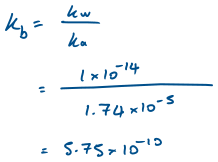
The equilibrium constant for this reaction is given by:
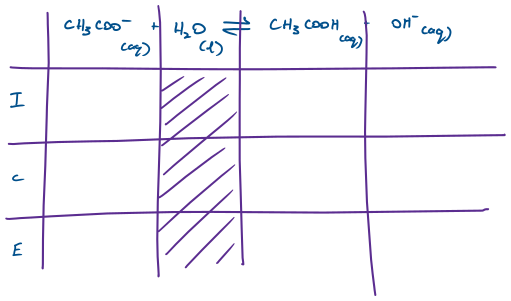
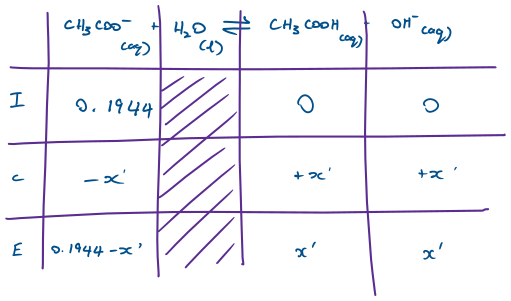
Step 2: Draw ICE table
An ICE table can be used to determine the concentration of OH– ions in the solution at equilibrium:
Hm but we don’t know what the concentration of CH3COO– is at equivalence point! Let’s go calculate it first.
Step 3: Calculate concentration of acetate ion at the equivalence point
At the equivalence point, all of the acetic acid has reacted with the NaOH to form its conjugate base, acetate ion (CH3COO–).
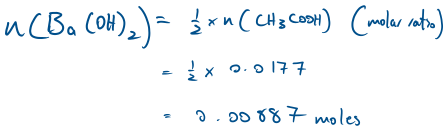
The number of moles of acetic acid initially present is (0.270M)(0.0657L) = 0.0177 moles. To find the concentration we need to know the volume at the end point.
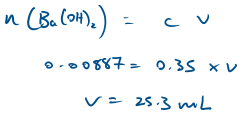
The volume of the solution at the equivalence point is 65.7mL + 25.3mL = 91mL, so the concentration of acetate ion at the equivalence point is (0.0177 moles)/(0.091L) = 0.1944M.
Step 4: Sub into ICE table
Step 4: Substitute into the Kb expression gives:
Kb=[CH3COO−][CH3COOH][OH−]
=0.1944−x′x′2
=0.1944x′2
5.75×10−10=0.1944x′2
x’ ≈ 10.57 × 10⁻⁶
which is the concentration of OH– ions in the solution. The pOH of the solution at equivalence point is therefore:
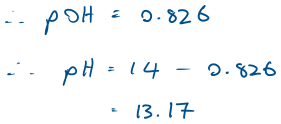
pOH=−log[OH−]=−log(10.57×10⁻⁶)≈4.976
and its pH is:
pH=14−pOH≈9.02
c) The pH at the optimal buffer point (2 marks)
ANSWER
We need to realise that the optimal buffer point is when there is equimolar acid and conjugate base.
This will occur at halfway to the equivalence point.
To understand this, consider you had 1 mole of CH3COOH.
After you add in 0.5 moles of OH- (or in this case, 0.25 moles of Ba(OH)2) you will have 0.5 moles of CH3COO- and also 0.5 moles of CH3COOH left. Thus, you have equimolar amounts of acid and conjugate base.
Thus, it will be at 0.5 x 25.3mL = 12.65mL
The pH will be:
Ka=[CH3COOH][CH3COO−][H3O+]
=[CH3COOH][CH3COO−][H3O+]
Ka=[H3O+]
1.74×10−5=[H3O+]
pH=4.76
d) The pH after 50mL of Ba(OH)2 has been added (2 marks)
ANSWER
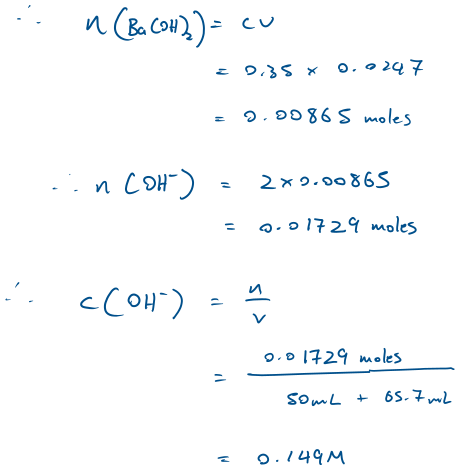
This is about double the equivalence point volume.
Getting to equivalence takes 25.3mL
Thus you add another 24.7 mL of Ba(OH)2.
This just adds pure OH-
And don’t worry, there’s plenty more where that came from.
Flick through the worked answers.
Loading sample…
3.1-to-1 support
Ask questions any time - inclass, afterclass or between classes! Contact your tutor anytime.
Classes continue through school holidaysChristmas / New Year: 2-week break
Module 1: Properties and structure of matterAtoms, bonding and the properties of substances+ — weekly outlineTerm 2 holidays — classes continue in holidays
Weeks start at 1 for each module. Weekly topics are from our existing plan and are being reviewed for the new syllabus.
Week 1
Matter and mixtures
Classify matter and mixtures, compare separation methods and review significant figures.
Week 2
The periodic table and chemical naming
Introduce periodic organisation, ionic and covalent bonding and the naming of compounds.
Week 3
Valence electrons and bonding
Connect valence electrons to chemical properties, Lewis diagrams and the formulas of compounds.
Week 4
Electron configurations
Use SPDF notation and orbital diagrams to describe electron arrangements.
Week 5
Electron transitions and flame tests
Connect Bohr's model and electron transitions to observed flame-test colours.
Week 6
Periodic trends
Explain patterns in ionisation energy and atomic properties using electron arrangements.
Week 7
Bond polarity
Use electronegativity differences to distinguish non-polar, polar and ionic bonding.
Week 8
Molecular shapes
Use electron-pair repulsion to predict three-dimensional shapes and connect shape to polarity.
Week 9
Bonding and material structures
Explain covalent networks and metallic structures and connect their bonding to material properties.
Week 10
Intermolecular forces
Compare dispersion, dipole and hydrogen-bonding interactions and their effects on substances.
Term 2 holidays — classes continue in holidays
Week 11
Boiling points and module consolidation
Combine intermolecular forces to explain boiling points and revisit the module's core ideas.
Weeks start at 1 for each module. Weekly topics are from our existing plan and are being reviewed for the new syllabus.
Week 1
Writing and balancing reactions
Write chemical equations and use conservation of mass and charge to balance them.
Week 2
The mole
Connect particle numbers, molar mass and reacting amounts using the mole concept.
Week 3
Empirical formulas and limiting reagents
Determine empirical formulas and identify which reactant limits the amount of product.
Week 4
Concentration
Distinguish solute and solvent and work with common concentration measures.
Week 5
Gas relationships
Use particle ideas to explain gas behaviour and introduce gas-law calculations.
Week 6
The ideal gas law
Combine gas relationships with mole calculations in worked examples.
Week 7
Quantitative Chemistry revision
Revisit balancing equations, reacting amounts, concentration and gas calculations.
Module 3: Chemical reactionsReactions, rates and energy changes+ — weekly outlineTerm 3 holidays — classes continue in holidaysTerm 4 holidays — classes continue in holidays
Weeks start at 1 for each module. Weekly topics are from our existing plan and are being reviewed for the new syllabus.
Week 1
Chemical changes and reactions
Distinguish physical and chemical changes and examine evidence that reactions have occurred.
Week 2
Precipitation and ionic equations
Use solubility rules to predict precipitates and construct full and net ionic equations.
Week 3
Metal reactions and reactivity
Compare metals reacting with acids, oxygen and water and build a reactivity series.
Week 4
Displacement and electron transfer
Explain metal displacement reactions using electron transfer and relative reactivity.
Term 3 holidays — classes continue in holidays
Week 5
Oxidation numbers and redox equations
Assign oxidation numbers and balance oxidation-reduction reactions.
Week 6
Electrochemical cells
Connect separated redox reactions to the production of electrical energy.
Week 7
Cell potentials
Calculate cell potentials and interpret electrode-potential relationships.
Week 8
Reaction rates
Measure and explain how quickly reactions occur using collision ideas.
Week 9
Factors affecting reaction rates
Use collision theory to explain effects of concentration, surface area and other rate factors.
Week 10
Reaction-type consolidation
Recognise and compare synthesis, decomposition, combustion, precipitation and acid reactions.
Week 11
Enthalpy and energy profiles
Distinguish exothermic and endothermic changes and draw reaction-energy profiles.
Week 12
Calorimetry and molar reactions
Solve heat calculations and connect measured heat to the mole ratios in a reaction.
Week 13
Bond energy
Explain energy changes by comparing the energy needed to break bonds with that released in bond formation.
Week 14
Hess's law
Combine reaction equations and enthalpy changes to find an unknown reaction enthalpy.
Week 15
Entropy and spontaneity
Introduce entropy and distinguish chemical spontaneity from everyday ideas about reaction speed.
Week 16
Gibbs free energy
Combine enthalpy and entropy to predict spontaneity using Gibbs free energy.
Term 4 holidays — classes continue in holidays
Week 17
Drivers of Reactions revision
Review calorimetry, energy profiles, bond energies, Hess's law, entropy and molar reactions.
Year 11 exam reviewPause between Modules 4 and 5 for four module reviews and four mock-paper weeks; contents inferred from the codes.+ — weekly outline
Weeks start at 1 for each module.
Week 1
Properties and Structure of Matter review
Practise the module-review paper on bonding, structure and properties.
Week 2
Quantitative Chemistry review
Review concentration, gas laws and reacting quantities through module-paper questions.
Week 3
Reactive Chemistry review
Revise reaction types and the key ideas used to explain chemical reactions.
Week 4
Drivers of Reactions review
Review heat calculations and the relationships between enthalpy, entropy and spontaneity.
Week 5
Preliminary mock paper 1
Practise mixed questions on shapes, gas laws, mole calculations, entropy and solubility.
Week 6
Preliminary mock paper 2
Review selected questions on enthalpy, reduction potentials and Lewis structures.
Week 7
Preliminary mock paper 3
Practise periodic trends, redox, dilution, Hess's law and galvanic-cell questions.
Week 8
Preliminary mock paper 4
Work through a further mock paper with emphasis on oxidation-number and redox reasoning.
Module 5: Equilibrium and Acid ReactionsEquilibrium, solubility and precipitation+ — weekly outlineAfter Week 3: Christmas / New Year break2 weeks offClasses resume: this module continuesSummer holidays — classes continue in holidays
Weeks start at 1 for each module.
Week 1
Reversible reactions
Introduce chemical reversibility and prepare for the Year 12 approach to study and practice.
Week 2
Dynamic equilibrium
Explain reversible reactions in closed systems and relate equal forward and reverse rates to observations.
Week 3
Equilibrium shifts and collision theory
Use the Haber reaction and collision theory to explain how equilibrium responds to changes.
After Week 3: Christmas / New Year break2 weeks off
Summer holidays — classes continue in holidays
Week 4
Le Chatelier's principle
Predict responses to disturbances and interpret concentration-time graphs.
Week 5
Equilibrium constants
Build an understanding of equilibrium expressions and use the equilibrium constant in calculations.
Week 6
Dilution and equilibrium calculations
Examine the effect of water and other disturbances and distinguish concentration changes from changes in the equilibrium constant.
Week 7
Dissolution and intermolecular forces
Explain solubility by comparing interactions within solutes, solvents and solutions.
Week 8
Solubility equilibria
Introduce the solubility product and connect precipitation to a dynamic equilibrium.
Week 9
Harder solubility and equilibrium questions
Practise molar-solubility and common-ion calculations and revisit equilibrium reasoning.
Module 6: Acid/Base ReactionsAcids, bases, titrations and buffers+ — weekly outlineTerm 2 holidays — classes continue in holidays
Weeks start at 1 for each module.
Week 1
Acids and bases
Introduce acid and base definitions and compare their observable properties.
Week 2
Neutralisation and acid-base theories
Explore uses and calorimetry of neutralisation and trace the development of acid-base definitions.
Week 3
Brønsted-Lowry theory
Explain proton transfer, hydronium and conjugate acid-base pairs.
Week 4
Amphiprotic species and salt acidity
Compare proton donation and acceptance and explain acid-base behaviour of oxides and ions.
Week 5
pH calculations
Calculate pH from hydrogen-ion concentration and handle logarithms and significant figures.
Week 6
Acid and base equilibrium constants
Use Ka, Kb, pKa and pKb and connect them to acid-base equilibria.
Week 7
Titrations and equilibrium practice
Revisit acid-base calculations and introduce titration reasoning and concentration determination.
Week 8
Titration technique and standard solutions
Choose appropriate standards and explain how glassware preparation affects titration results.
Term 2 holidays — classes continue in holidays
Week 9
Buffers
Explain buffer action, natural buffers and responses to added acid or base.
Week 10
Titration and conductivity curves
Interpret buffer regions, polyprotic titration features and conductometric reactions.
Week 11
Acid-base exam practice
Apply the module's ideas in exam-style questions.
Module 7: Organic ChemistryOrganic families, synthesis and polymers+ — weekly outlineTerm 3 holidays — classes continue in holidays
Weeks start at 1 for each module.
Week 1
Organic molecules and naming
Introduce carbon chemistry, hydrocarbons, functional groups and naming conventions.
Week 2
Functional groups and molecular shapes
Name compounds across functional groups and connect hydrocarbon structures to three-dimensional geometry.
Week 3
Organic properties and their implications
Compare alcohols and alkanes using bonding and intermolecular forces, then consider social and ethical issues.
Week 4
Alkane and alkene reactions
Write and compare combustion and other characteristic hydrocarbon reactions.
Week 5
Alcohols
Classify alcohols and connect their structures to physical and chemical properties.
Week 6
Alcohol oxidation and related compounds
Analyse alcohol redox reactions and bioethanol, then examine carboxylic acids and amines.
Week 7
Esters and amides
Explain esterification, biodiesel production and the formation of amides.
Week 8
Soaps, detergents and polymerisation
Connect fats to cleaning agents and introduce addition polymerisation.
Week 9
Addition polymers
Compare the structures, properties and uses of polymers including polyethylene, PVC and PTFE.
Week 10
Condensation polymers
Explain polyester and polyamide formation and consolidate organic reaction pathways.
Term 3 holidays — classes continue in holidays
Week 11
Organic Chemistry exam practice
Apply organic structures, properties and reaction knowledge to exam-style questions.
Module 8: Applying Chemical IdeasChemical tests and instrumental analysis+ — weekly outline
Weeks start at 1 for each module.
Week 1
Monitoring chemicals and identifying ions
Explain why chemical monitoring matters and use flame and precipitation tests.
Week 2
Complex ions and quantitative analysis
Explore complex formation, gravimetric analysis and precipitation titrations.
Week 3
Absorption and spectrophotometry
Compare colourimetry, ultraviolet-visible measurements and atomic absorption spectroscopy.
Week 4
Atomic absorption and functional-group tests
Explain atomic absorption and select chemical tests for organic functional groups.
Week 5
Mass spectrometry
Explain ionisation and fragmentation and use mass spectra to investigate molecular structure.
Week 6
Carbon-13 NMR
Connect nuclear shielding, chemical shift and carbon environments to NMR signals.
Week 7
Proton NMR
Interpret hydrogen environments, chemical shifts and integration in proton spectra.
Week 8
Infrared spectroscopy
Connect bond vibrations to infrared absorption and interpret spectra to identify structures.
Week 9
Chemical synthesis case studies
Compare synthesis pathways using reagent availability, conditions, yield, purity and wider impacts.
Trials preparationModule review and trial exam practice+ — weekly outlineTerm 4 holidays — classes continue in holidays
Weeks start at 1 for each module.
Week 1
Equilibrium revision
Revisit Module 5 theory and practise questions selected around areas needing revision.
Week 2
Acid-base revision
Practise theory comparisons, conjugate pairs, salt acidity, pH and titration reasoning.
Term 4 holidays — classes continue in holidays
Week 3
Organic Chemistry revision
Review boiling-point trends, reaction pathways, esters, soaps and polymer questions.
Week 4
Chemical analysis revision
Practise flame tests, complexes, absorption measurements and structure determination.
Week 5
Trial mock paper 1
Apply acid-base, stoichiometric, energetic and organic ideas across a mixed paper.
Week 6
Trial mock paper 2
Practise equilibrium, calibration, organic analysis and conductivity questions.
Week 7
Trial mock paper 3
Review complexes, scientific skills, enthalpy and organic properties through a further mock paper.
HSC exam preparationInferred from the C10 codes: a possible final seven-week paper and exam-technique block; sequence needs owner confirmation.+ — weekly outline
Weeks start at 1 for each module.
Week 1
Solubility-product exam consolidation
Practise precipitation, molar-solubility and common-ion calculations alongside related energetics questions.
Week 2
Acid-base exam consolidation
Compare theory limitations and practise conjugate-pair and buffer calculations.
Week 3
Organic reaction exam consolidation
Revisit alcohol energetics and build reaction flowcharts for alcohols and hydrocarbons.
Week 4
Chemical analysis exam consolidation
Practise precipitation titrations, gravimetric analysis and structure questions from the available paper.
Week 5
Mixed Chemistry exam practice
Work through selected buffer, enthalpy, organic, solubility and calculation questions.
Week 6
Planning Chemistry responses
Review selected paper questions and practise specific explanations, equations and response planning.
Week 7
Chemistry exam technique
Combine final question practice with time management, planning and avoiding common mistakes.
A weekly class. Support around it.
Choose your year, find a time and try a lesson.
Year 10/11 Chemistry
$55/ hour
$110 per week
Includes a two-hour class
Homework with step-by-step solutions for every question
Can I join online Chemistry tutoring from Sydney or outside Sydney?
Yes. Our Chemistry tutoring is online over Zoom, welcoming Year 11 and Year 12 HSC students from Sydney, regional NSW and elsewhere in Australia. Small-group lessons include exam-style homework, worked solutions and 1-to-1 tutor support. If you study a different curriculum, contact us with your topics to check whether the NSW HSC course suits your needs.
How does a Chemistry tutor help me improve my exam answers?
There's 2 important prongs: 1. Learning the content well and 2. Practice. First, we teach you what’s happening in the reaction so you can explain why it happens and work out which calculation to use when the question changes.
Then you practise HSC-style questions in class. We also review real student responses together, especially in Trial exam and HSC preparation classes.
Do I need to be good at Maths to do Chemistry?
You will use ratios, rearranging equations and scientific notation. We connect each calculation to the chemistry behind it, so you can see what the numbers represent.
What if my school teaches the topics in a different order?
Bring your assessment schedule. We can compare it with the class plan and discuss support for the topics you need sooner.
Can I join after the course has started?
Tell us your year, the topics you have covered and where you feel stuck. We’ll help you find a suitable class and discuss any catching up before you enrol.
Can I ask questions outside class?
Yes. Bring the question and your working to your tutor. The 1-to-1 support is there to help you work through the step or idea that has not clicked yet.
What happens when I book a trial?
Send us your year, subject and preferred class. We’ll help you find a suitable lesson. The first lesson is only charged if you want to continue, otherwise it's totally free!
Group lessons don't work for my child. They're too shy to ask questions.
I was always that shy boy. I was scared to ask questions - I was scared of what other people would think.
Students can ask questions 1-1 after class, or between classes via email/text.
I ask every student questions during class – so everyone is forced to interact.
I monitor every student to see if they’re falling behind.
If you definitely need a 1-1 setting, then you should hire someone else.
But, is the setting more important to you, than your child getting an expert? There’s a lot of tutors out there. But how many of them have topped NSW? Not all of them know chemical equilibrium and electromagnetism like I do. Or how to explain it to get the "Aha!" moment. Or why students lose marks. Or how to fix it. And that means they won't produce results, like helping Kirsten Chu, 2022, move from 56% to 91%.
Can my child catchup to the group pace?
No one wants to be in an environment where they're far behind everyone else. To help you judge if it's suitable, the average student we get comes in with marks at, or a bit below average. We get a mix of selective (NSB, NSG, Ruse etc), private (Scots, St Patricks, Meriden etc) and comprehensive schools (Castle Hill, Carlingford HS etc). We help them catchup by answering questions after class and providing support material for previous topics.
In class when we go through a new topic, we will always explain it from scratch - so even if you have missed out on previous concepts, it won't stop you from getting the new ones.
But what if my child has questions?
Our group is run differently to most tutors. I am willing to spend 1-1 time with you. If you have questions – you can ask me 1-1 after class! And throughout the week! I’ll spend an hour with you if you need it.
How do your classes work?
We have one 2 hour session per week. It's online, via Zoom.
What do you do in class?
We start the lesson with a 10 min quiz. Then we go through a new concept and then do a few questions to solidfy it. Then we repeat this for the whole lesson. When exam time comes, we do revision lessons where a practice exam is sent before class, and the hard questions students request are reviewed in class.
How does payment work?
We accept payment via Bank Transfer. We typically bill termly. If you wish to discontinue, all unused lessons will be refunded, in full, to you.
What if I miss a lesson?
We highly recommend not to skip lessons for exams - if you are pressed for time, it is best if you skip the homework but come anyway. If you are away for a lesson, all materials will be provided and a recording will be made for you, however, the lesson will not be refunded.
Yes - classes run as per usual. It's as if the holidays do not exist. But we do not run intensive lessons in the holidays as they are ineffective for students.
Group size
It varies, but often hovers around 5
What do students need to join online?
Enthusiasm, pen, and preferably a dedicated book. All other resources will be sent.
How do you prepare students for School Exams?
The major reason why students do not do well in their exams is because they lack knowledge of the core concepts. After doing content with us, most students do not experience this anymore. From this strong foundation, we do weekly exam style problems in the homework - meaning weekly practice for exams.
Just before exams, we will also give access to our private collection of school past papers which is the best practice. We will also go through exam technique in class before exams.
When will you finish the syllabus?
In the accelerated classes, we usually finish the entire syllabus 1 term before trials (final Year 12 exams in Term 3 Week 2). This gives us ~7 weeks of revision before trials. We will then have ~10 weeks of revision after Trials for the HSC. We will revise each module with a weekly exam on that module, and then do mock papers.
In School Paced classes, we match school - so we have around 6 weeks of revision for HSC.
What order do you cover the syllabus content in?
Module 1, 2, 3, 4, 5, 6, 7, 8.
But that order isn't what my school is doing!
Some schools do decide to do it out of order. In my experience, this is ok because the same content is covered by the time you sit the exam. The most important factor is that the student learns something - even if it's not synchronised with school.
What is your typical student like?
Our students typically come with marks at, or a bit below average. We get a mix of selective (NSB, NSG, Ruse etc), private (Scots, St Patricks, Meriden etc) and comprehensive schools (Castle Hill, Carlingford HS etc).
What does a good candidate for your program look like?
Your improvement does not depend on how smart you are. The most important quality that determines success in the program is your willingness to work. Students that have shown dramatic improvements like Jade Yang and Kirsten Chu put in 10h+ per week into Physics and Chemistry. We make it easy for you - as long as you do all the homework (exam practice) and come to every class, you will improve.
The question is - will you do it?
Do you offer online Physics and Chemistry tutoring?
Yes. Our online Physics tutoring and Chemistry tutoring are small-group classes for Year 11 and Year 12 students studying the NSW HSC. Physics is sometimes shortened to ‘phys’, but the course is the same HSC Physics subject. Lessons take place on Zoom, with exam-style homework, worked solutions and 1-to-1 tutor support between classes.
Can I join from Sydney, regional NSW or outside NSW?
Yes. Classes are online, so you can join from Sydney, Newcastle, Wollongong, regional NSW or elsewhere in Australia. You do not need to travel to a tutoring centre.
The Physics and Chemistry courses are designed for the NSW HSC. If you study another state's syllabus or a different curriculum, contact us with your year and topics so we can discuss whether the course is suitable. Online access does not mean every curriculum is covered.