Year 12 रसायन विज्ञान ट्यूशन। छोटे समूह। ऑनलाइन कक्षा।
हर हफ़्ते Zoom पर छोटे समूह में दो घंटे की एक कक्षा होती है। परीक्षा जैसे सवालों वाले गृहकार्य के हर सवाल का चरणबद्ध हल मिलता है। विद्यार्थी शिक्षक से अलग से भी सवाल पूछ सकते हैं।
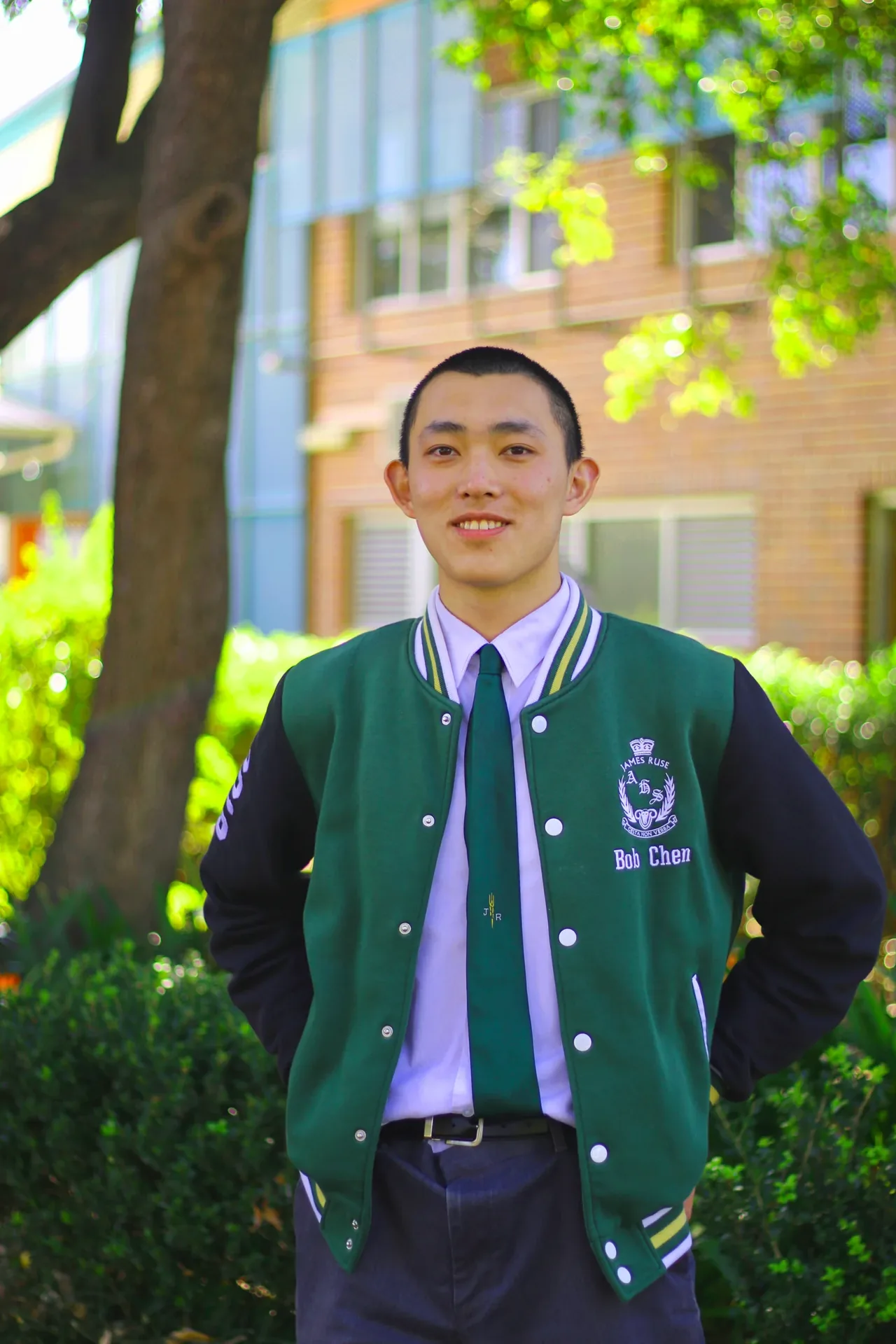
उनमें हर अवधारणा को आसान हिस्सों में बाँटकर समझाने की खूबियाँ हैं।
Jade को कक्षा 11 रसायन विज्ञान में 49% मिले थे। उन्हें कठिन विचार समझने का तरीका चाहिए था, सिर्फ़ और पाठ्यपुस्तक प्रश्न नहीं। Bob ने अवधारणाओं को चरणों में समझाया, कक्षा के बाहर मदद की और कमज़ोर हिस्सों पर परीक्षा-अभ्यास कराया। आगे चलकर उन्होंने HSC रसायन विज्ञान में Band 6 पाया।
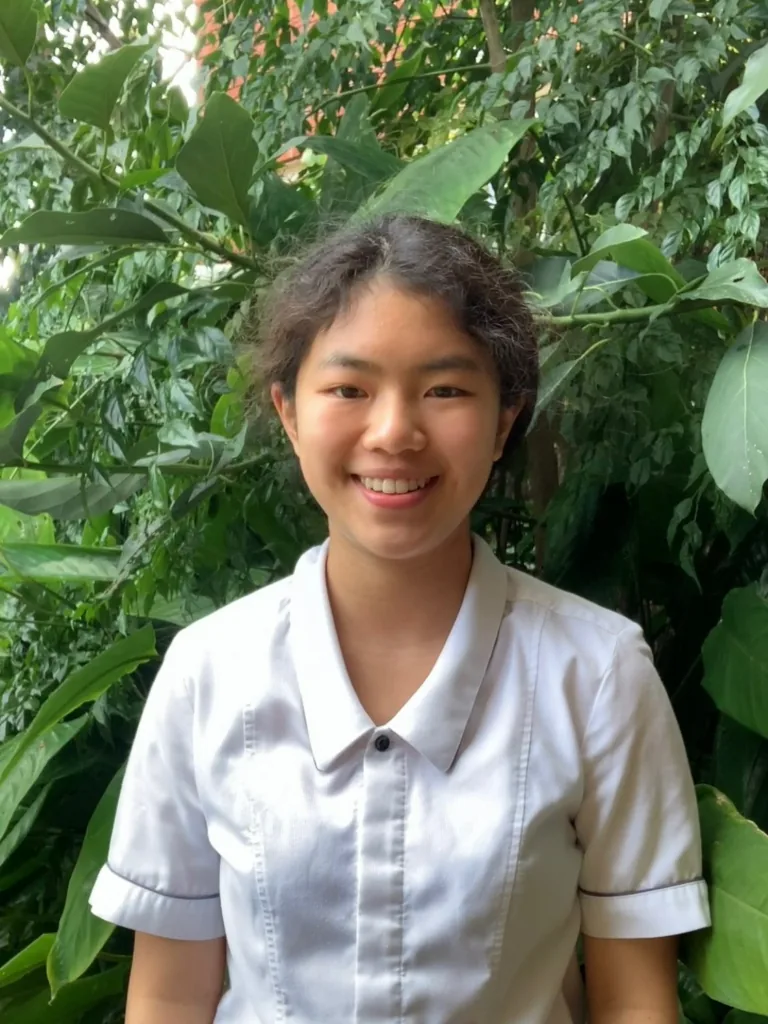
Kirsten के अंक लगातार गिर रहे थे और उन्हें भौतिकी से डर लगने लगा था। व्यक्तिगत ध्यान वाली कक्षाओं में वे बेझिझक सवाल पूछ सकीं और अपनी गति से सीख सकीं। कठिन अभ्यास और कक्षा के बाहर की मदद से उनकी तैयारी बेहतर हुई। रसायन विज्ञान के ट्रायल में 56% से HSC में 91% तक पहुँचीं और भौतिकी में 92 अंक भी पाए।
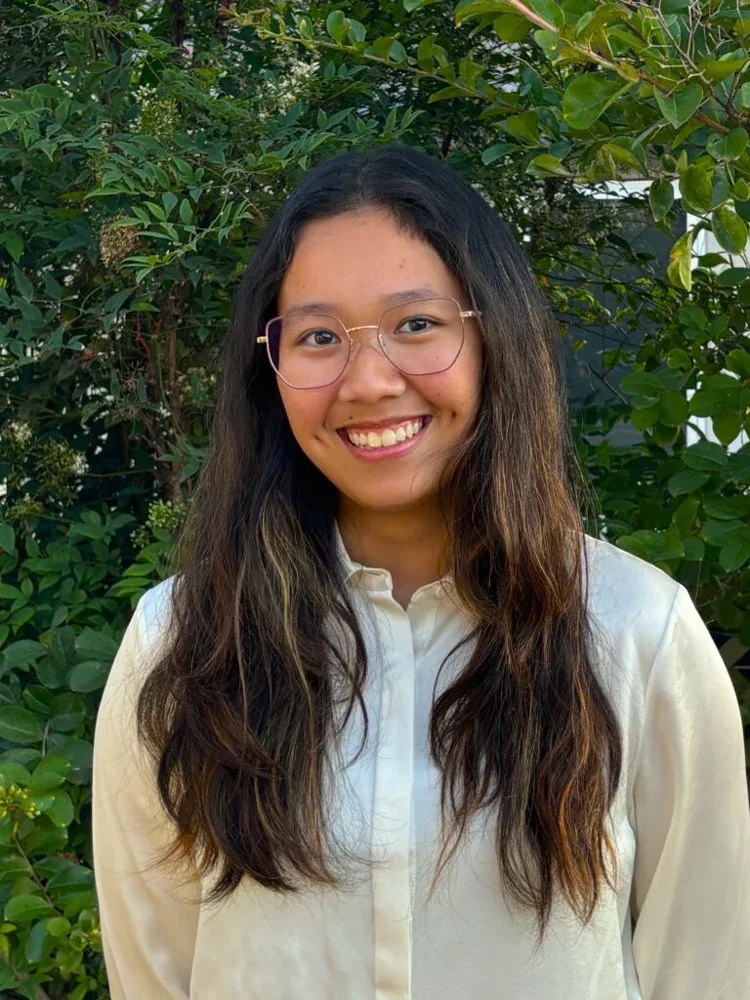
Queenie को ऐसा शिक्षक पसंद था जो बात को दूसरे तरीके से समझाए, कक्षा के बाद सवालों के जवाब दे और स्कूल के आकलन में मदद करे। इससे उन्हें केवल पाठ्यपुस्तक पर निर्भर रहने के बजाय भौतिकी को नए तरीकों से समझने में मदद मिली। Hurlstone Agricultural से स्नातक होने पर उनके भौतिकी में 95 अंक और ATAR 99.75 था।
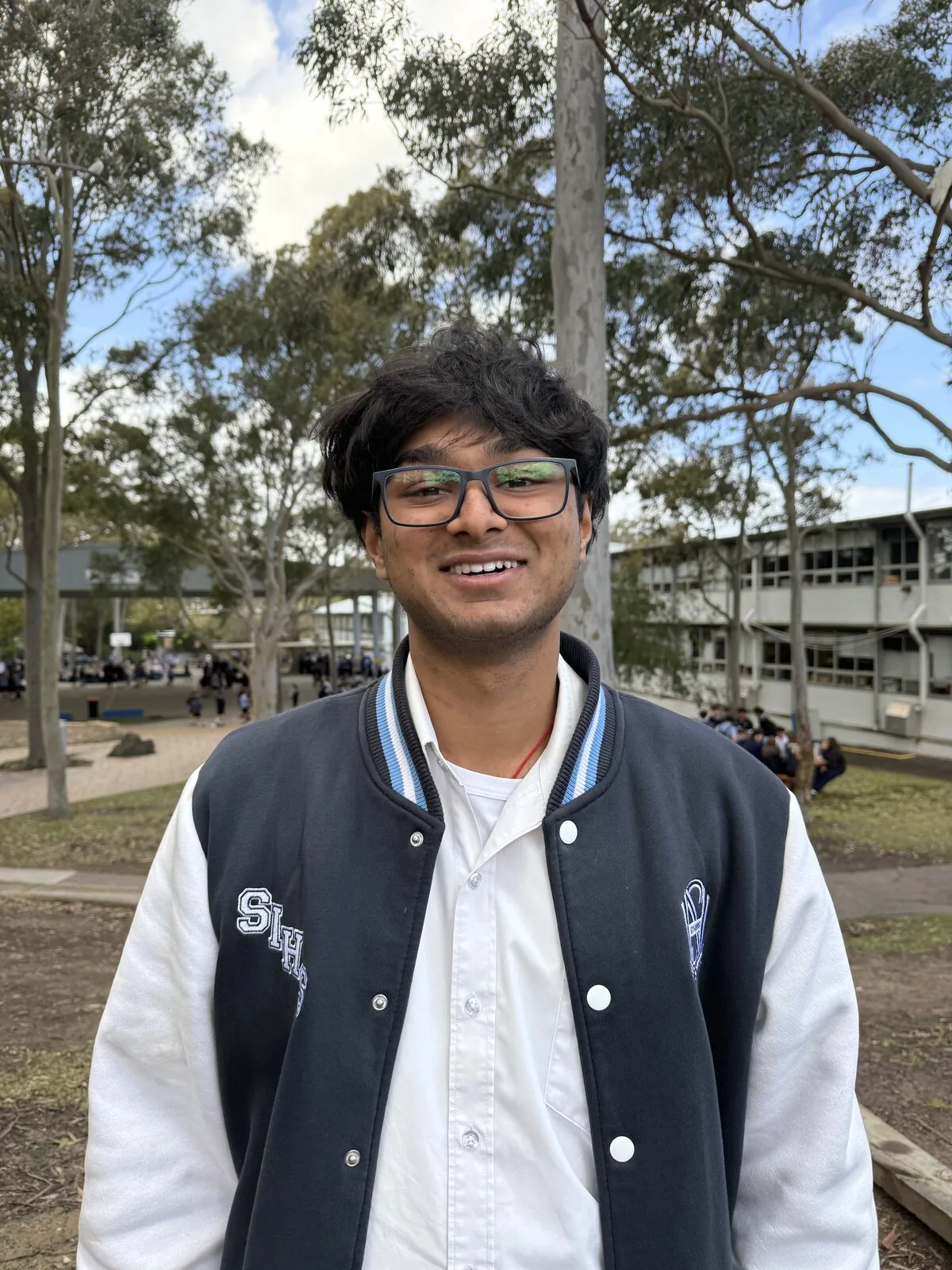
James Ruse में भौतिकी में प्रथम आने से पहले, मैं माँ को अपने अंक बताने से भी डरता था।
कक्षा का दृश्य · मूल स्कैन की गई परीक्षा
कक्षा 10 में मैं ऐसा था।
बहुत बुरा।
लेकिन एक चीज़ में मैं सेल्फ़ी लेने से भी ज़्यादा ख़राब था।
विज्ञान।
क्योंकि मेरे अंक अच्छे नहीं आ रहे थे।
धत्त। पूरे बैच में 50वाँ स्थान।
मुझे विज्ञान से नफ़रत थी।
मैंने पढ़ा। याद किया। अभ्यास किया।
फिर भी मैं गलत सूत्र लगाता था। परीक्षा में मुझे अंदाज़ा लगाना पड़ता था।
मैं कभी ऊँची रैंक तक नहीं पहुँचा और न 90% से ज़्यादा ला पाया।
मेरा नियंत्रण खो गया था।
मैं माँ को अपने अंक नहीं बताना चाहता था।
इसलिए मुझे पता था कि कुछ बदलना होगा।
आगे चलकर मैंने हासिल किया
James Ruse में भौतिकी में प्रथम।James Ruse में भौतिकी में प्रथम।
राज्य स्तर पर भौतिकी में प्रथम रैंक।राज्य स्तर पर भौतिकी में प्रथम रैंक।
ATAR 99.85.ATAR 99.85.
USYD में मेडिसिन।USYD में मेडिसिन।
कक्षा 10 में मैं ऐसा था।
बहुत बुरा।
लेकिन एक चीज़ में मैं सेल्फ़ी लेने से भी ज़्यादा ख़राब था।
विज्ञान।
क्योंकि मेरे अंक अच्छे नहीं आ रहे थे।
धत्त। पूरे बैच में 50वाँ स्थान।
मुझे विज्ञान से नफ़रत थी।
मैंने पढ़ा। याद किया। अभ्यास किया।
फिर भी मैं गलत सूत्र लगाता था। परीक्षा में मुझे अंदाज़ा लगाना पड़ता था।
मैं कभी ऊँची रैंक तक नहीं पहुँचा और न 90% से ज़्यादा ला पाया।
मेरा नियंत्रण खो गया था।
मैं माँ को अपने अंक नहीं बताना चाहता था।
इसलिए मुझे पता था कि कुछ बदलना होगा।
आगे चलकर मैंने हासिल किया
James Ruse में भौतिकी में प्रथम।
राज्य स्तर पर भौतिकी में प्रथम रैंक।
ATAR 99.85.
USYD में मेडिसिन।
तो हमने यहकैसे किया?
Explained intuitively and from scratch
Start with saturated salt water at a constant temperature.
Start with saturated salt water at a constant temperature.
Add tracer salt. Bright green marks its radioactive chloride ions.
The pile stays. The amount of dissolved salt stays the same too.
Let’s zoom into one crystal in the pile.
Its surface is a lattice of Na⁺ and Cl⁻ ions.
Watch the bright-green chloride ions at the surface.
Tagged ions leave. Ordinary ions join. Both happen at the same average rate.
Tagged chloride is now in the water, making the solution radioactive.
The amounts stay the same, but ions keep exchanging. That’s dynamic equilibrium.
2.परीक्षा जैसे गृहकार्य
आप जानते हैं, स्कूल में आप यह सीखते हैं…
लेकिन परीक्षा में, आपको ऐसा मिलता है…But then,in the exam,आपको ऐसा मिलता है…
सोचिए, हर हफ़्ते गृहकार्य में ऐसे सवाल मिलें तो?
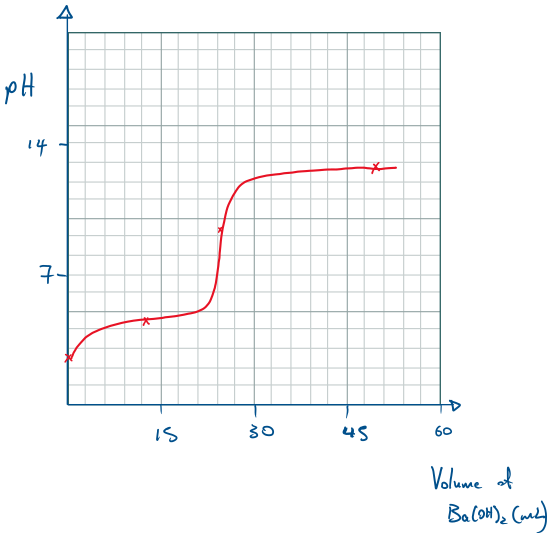
A man begins to titrate 65.7mL of 0.270M acetic acid against 0.350M Ba(OH)2. Acetic acid has a pKa of 4.76. Draw the pH graph, ensuring you label the following points:
The initial pH (2 marks)
The pH at equivalence point (3 marks)
The pH at the optimal buffer point (2 marks)
The pH after 50mL of Ba(OH)2 has been added (2 marks)
और हर सवाल का चरण-दर-चरण हल भी हो।
a) The initial pH (2 marks)
ANSWER
Step 1: Thinking
Acetic acid is a weak acid and its dissociation in water can be represented as below:
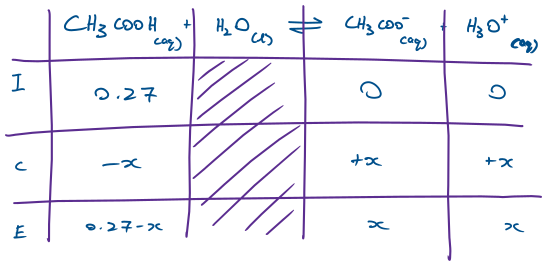
Step 2: Draw up ICE table
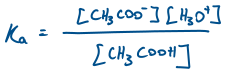
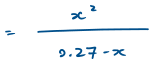
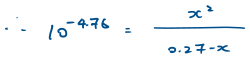
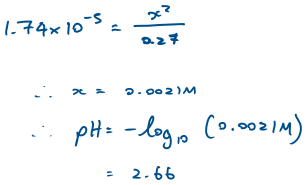
Step 3: Substitute into the Ka expression
The acid dissociation constant, Ka, can be calculated from the pKa value:
Make the small change assumption
सभी खोलेंकम दिखाएँ
a) The initial pH (2 marks)
ANSWER
Step 1: Thinking
Acetic acid is a weak acid and its dissociation in water can be represented as below:
Step 2: Draw up ICE table
Step 3: Substitute into the Ka expression
The acid dissociation constant, Ka, can be calculated from the pKa value:
Make the small change assumption
b) The pH at equivalence point (3 marks)
ANSWER
Step 1: Thinking
At the equivalence point, all of the acetic acid has reacted with the NaOH to form its conjugate base, acetate ion (CH3COO–). This is why there is a pH at equivalence point!
To determine the pH, we need to consider the hydrolysis of acetate ion in water:
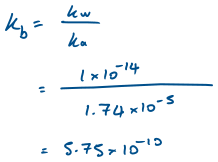
The equilibrium constant for this reaction is given by:
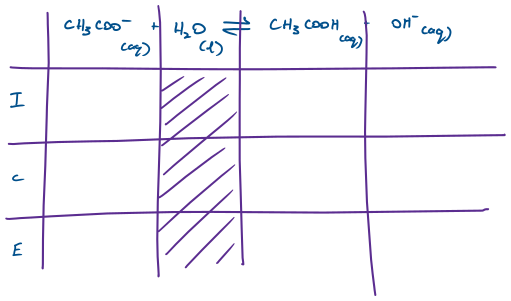
Step 2: Draw ICE table
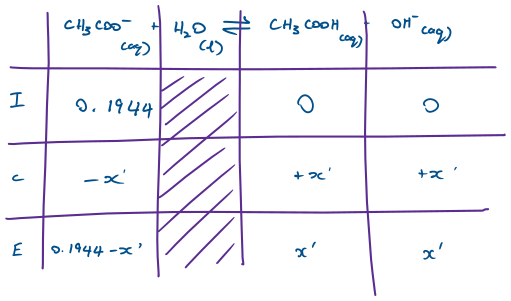
An ICE table can be used to determine the concentration of OH– ions in the solution at equilibrium:
Hm but we don’t know what the concentration of CH3COO– is at equivalence point! Let’s go calculate it first.
Step 3: Calculate concentration of acetate ion at the equivalence point
At the equivalence point, all of the acetic acid has reacted with the NaOH to form its conjugate base, acetate ion (CH3COO–).
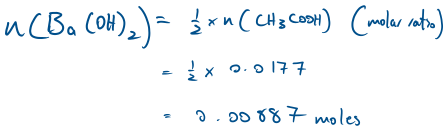
The number of moles of acetic acid initially present is (0.270M)(0.0657L) = 0.0177 moles. To find the concentration we need to know the volume at the end point.
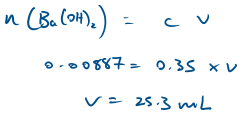
The volume of the solution at the equivalence point is 65.7mL + 25.3mL = 91mL, so the concentration of acetate ion at the equivalence point is (0.0177 moles)/(0.091L) = 0.1944M.
Step 4: Sub into ICE table
Step 4: Substitute into the Kb expression gives:
Kb=[CH3COO−][CH3COOH][OH−]
=0.1944−x′x′2
=0.1944x′2
5.75×10−10=0.1944x′2
x’ ≈ 10.57 × 10⁻⁶
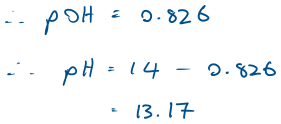
which is the concentration of OH– ions in the solution. The pOH of the solution at equivalence point is therefore:
pOH=−log[OH−]=−log(10.57×10⁻⁶)≈4.976
and its pH is:
pH=14−pOH≈9.02
c) The pH at the optimal buffer point (2 marks)
ANSWER
We need to realise that the optimal buffer point is when there is equimolar acid and conjugate base.
This will occur at halfway to the equivalence point.
To understand this, consider you had 1 mole of CH3COOH.
After you add in 0.5 moles of OH- (or in this case, 0.25 moles of Ba(OH)2) you will have 0.5 moles of CH3COO- and also 0.5 moles of CH3COOH left. Thus, you have equimolar amounts of acid and conjugate base.
Thus, it will be at 0.5 x 25.3mL = 12.65mL
The pH will be:
Ka=[CH3COOH][CH3COO−][H3O+]
=[CH3COOH][CH3COO−][H3O+]
Ka=[H3O+]
1.74×10−5=[H3O+]
pH=4.76
d) The pH after 50mL of Ba(OH)2 has been added (2 marks)
ANSWER
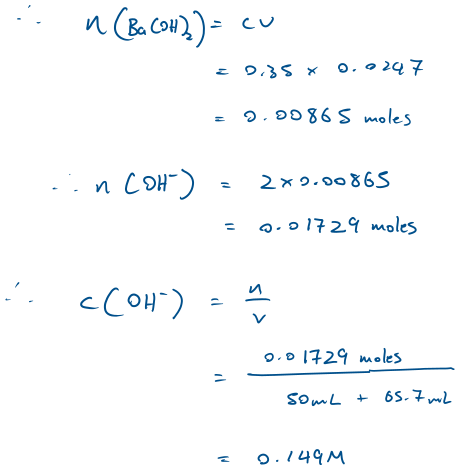
This is about double the equivalence point volume.
Getting to equivalence takes 25.3mL
Thus you add another 24.7 mL of Ba(OH)2.
This just adds pure OH-
And don’t worry, there’s plenty more where that came from.
Flick through the worked answers.
Loading sample…
3.ट्यूटर से व्यक्तिगत सहायता
कक्षा में, कक्षा के बाद या दो कक्षाओं के बीच कभी भी सवाल पूछें। अपने ट्यूटर से कभी भी संपर्क करें।
स्कूल की छुट्टियों में भी कक्षाएँ जारी रहती हैंक्रिसमस और नए साल पर दो सप्ताह का अवकाश
मॉड्यूल 5: Equilibrium and Acid ReactionsEquilibrium, solubility and precipitation+ — साप्ताहिक रूपरेखासप्ताह 3 के बाद: क्रिसमस और नए साल की छुट्टी2 सप्ताह की छुट्टीकक्षाएँ फिर शुरू: यह मॉड्यूल जारी रहेगागर्मी की छुट्टियाँ के दौरान कक्षाएँ जारी रहेंगी
हर मॉड्यूल में सप्ताहों की गिनती 1 से शुरू होती है।
सप्ताह 1
Reversible reactions
Introduce chemical reversibility and prepare for the Year 12 approach to study and practice.
सप्ताह 2
Dynamic equilibrium
Explain reversible reactions in closed systems and relate equal forward and reverse rates to observations.
सप्ताह 3
Equilibrium shifts and collision theory
Use the Haber reaction and collision theory to explain how equilibrium responds to changes.
सप्ताह 3 के बाद: क्रिसमस और नए साल की छुट्टी2 सप्ताह की छुट्टी
गर्मी की छुट्टियाँ के दौरान कक्षाएँ जारी रहेंगी
सप्ताह 4
Le Chatelier's principle
Predict responses to disturbances and interpret concentration-time graphs.
सप्ताह 5
Equilibrium constants
Build an understanding of equilibrium expressions and use the equilibrium constant in calculations.
सप्ताह 6
Dilution and equilibrium calculations
Examine the effect of water and other disturbances and distinguish concentration changes from changes in the equilibrium constant.
सप्ताह 7
Dissolution and intermolecular forces
Explain solubility by comparing interactions within solutes, solvents and solutions.
सप्ताह 8
Solubility equilibria
Introduce the solubility product and connect precipitation to a dynamic equilibrium.
सप्ताह 9
Harder solubility and equilibrium questions
Practise molar-solubility and common-ion calculations and revisit equilibrium reasoning.
मॉड्यूल 6: Acid/Base ReactionsAcids, bases, titrations and buffers+ — साप्ताहिक रूपरेखाटर्म 2 की छुट्टियाँ के दौरान कक्षाएँ जारी रहेंगी
हर मॉड्यूल में सप्ताहों की गिनती 1 से शुरू होती है।
सप्ताह 1
Acids and bases
Introduce acid and base definitions and compare their observable properties.
सप्ताह 2
Neutralisation and acid-base theories
Explore uses and calorimetry of neutralisation and trace the development of acid-base definitions.
सप्ताह 3
Brønsted-Lowry theory
Explain proton transfer, hydronium and conjugate acid-base pairs.
सप्ताह 4
Amphiprotic species and salt acidity
Compare proton donation and acceptance and explain acid-base behaviour of oxides and ions.
सप्ताह 5
pH calculations
Calculate pH from hydrogen-ion concentration and handle logarithms and significant figures.
सप्ताह 6
Acid and base equilibrium constants
Use Ka, Kb, pKa and pKb and connect them to acid-base equilibria.
सप्ताह 7
Titrations and equilibrium practice
Revisit acid-base calculations and introduce titration reasoning and concentration determination.
सप्ताह 8
Titration technique and standard solutions
Choose appropriate standards and explain how glassware preparation affects titration results.
टर्म 2 की छुट्टियाँ के दौरान कक्षाएँ जारी रहेंगी
सप्ताह 9
Buffers
Explain buffer action, natural buffers and responses to added acid or base.
सप्ताह 10
Titration and conductivity curves
Interpret buffer regions, polyprotic titration features and conductometric reactions.
सप्ताह 11
Acid-base exam practice
Apply the module's ideas in exam-style questions.
मॉड्यूल 7: Organic ChemistryOrganic families, synthesis and polymers+ — साप्ताहिक रूपरेखाटर्म 3 की छुट्टियाँ के दौरान कक्षाएँ जारी रहेंगी
हर मॉड्यूल में सप्ताहों की गिनती 1 से शुरू होती है।
सप्ताह 1
Organic molecules and naming
Introduce carbon chemistry, hydrocarbons, functional groups and naming conventions.
सप्ताह 2
Functional groups and molecular shapes
Name compounds across functional groups and connect hydrocarbon structures to three-dimensional geometry.
सप्ताह 3
Organic properties and their implications
Compare alcohols and alkanes using bonding and intermolecular forces, then consider social and ethical issues.
सप्ताह 4
Alkane and alkene reactions
Write and compare combustion and other characteristic hydrocarbon reactions.
सप्ताह 5
Alcohols
Classify alcohols and connect their structures to physical and chemical properties.
सप्ताह 6
Alcohol oxidation and related compounds
Analyse alcohol redox reactions and bioethanol, then examine carboxylic acids and amines.
सप्ताह 7
Esters and amides
Explain esterification, biodiesel production and the formation of amides.
सप्ताह 8
Soaps, detergents and polymerisation
Connect fats to cleaning agents and introduce addition polymerisation.
सप्ताह 9
Addition polymers
Compare the structures, properties and uses of polymers including polyethylene, PVC and PTFE.
सप्ताह 10
Condensation polymers
Explain polyester and polyamide formation and consolidate organic reaction pathways.
टर्म 3 की छुट्टियाँ के दौरान कक्षाएँ जारी रहेंगी
सप्ताह 11
Organic Chemistry exam practice
Apply organic structures, properties and reaction knowledge to exam-style questions.
मॉड्यूल 8: Applying Chemical IdeasChemical tests and instrumental analysis+ — साप्ताहिक रूपरेखा
हर मॉड्यूल में सप्ताहों की गिनती 1 से शुरू होती है।
सप्ताह 1
Monitoring chemicals and identifying ions
Explain why chemical monitoring matters and use flame and precipitation tests.
सप्ताह 2
Complex ions and quantitative analysis
Explore complex formation, gravimetric analysis and precipitation titrations.
सप्ताह 3
Absorption and spectrophotometry
Compare colourimetry, ultraviolet-visible measurements and atomic absorption spectroscopy.
सप्ताह 4
Atomic absorption and functional-group tests
Explain atomic absorption and select chemical tests for organic functional groups.
सप्ताह 5
Mass spectrometry
Explain ionisation and fragmentation and use mass spectra to investigate molecular structure.
सप्ताह 6
Carbon-13 NMR
Connect nuclear shielding, chemical shift and carbon environments to NMR signals.
सप्ताह 7
Proton NMR
Interpret hydrogen environments, chemical shifts and integration in proton spectra.
सप्ताह 8
Infrared spectroscopy
Connect bond vibrations to infrared absorption and interpret spectra to identify structures.
सप्ताह 9
Chemical synthesis case studies
Compare synthesis pathways using reagent availability, conditions, yield, purity and wider impacts.
Trials preparationModule review and trial exam practice+ — साप्ताहिक रूपरेखाटर्म 4 की छुट्टियाँ के दौरान कक्षाएँ जारी रहेंगी
हर मॉड्यूल में सप्ताहों की गिनती 1 से शुरू होती है।
सप्ताह 1
Equilibrium revision
Revisit Module 5 theory and practise questions selected around areas needing revision.
सप्ताह 2
Acid-base revision
Practise theory comparisons, conjugate pairs, salt acidity, pH and titration reasoning.
टर्म 4 की छुट्टियाँ के दौरान कक्षाएँ जारी रहेंगी
सप्ताह 3
Organic Chemistry revision
Review boiling-point trends, reaction pathways, esters, soaps and polymer questions.
सप्ताह 4
Chemical analysis revision
Practise flame tests, complexes, absorption measurements and structure determination.
सप्ताह 5
Trial mock paper 1
Apply acid-base, stoichiometric, energetic and organic ideas across a mixed paper.
सप्ताह 6
Trial mock paper 2
Practise equilibrium, calibration, organic analysis and conductivity questions.
सप्ताह 7
Trial mock paper 3
Review complexes, scientific skills, enthalpy and organic properties through a further mock paper.
HSC exam preparationInferred from the C10 codes: a possible final seven-week paper and exam-technique block; sequence needs owner confirmation.+ — साप्ताहिक रूपरेखा
हर मॉड्यूल में सप्ताहों की गिनती 1 से शुरू होती है।
सप्ताह 1
Solubility-product exam consolidation
Practise precipitation, molar-solubility and common-ion calculations alongside related energetics questions.
सप्ताह 2
Acid-base exam consolidation
Compare theory limitations and practise conjugate-pair and buffer calculations.
सप्ताह 3
Organic reaction exam consolidation
Revisit alcohol energetics and build reaction flowcharts for alcohols and hydrocarbons.
सप्ताह 4
Chemical analysis exam consolidation
Practise precipitation titrations, gravimetric analysis and structure questions from the available paper.
सप्ताह 5
Mixed Chemistry exam practice
Work through selected buffer, enthalpy, organic, solubility and calculation questions.
सप्ताह 6
Planning Chemistry responses
Review selected paper questions and practise specific explanations, equations and response planning.
सप्ताह 7
Chemistry exam technique
Combine final question practice with time management, planning and avoiding common mistakes.
रसायन विज्ञान कक्षा की फीस
साप्ताहिक छोटी कक्षा की फीस, उसमें क्या शामिल है और आपके लिए सही समय देखें।
क्या Sydney के बाहर के विद्यार्थी ऑनलाइन Chemistry पढ़ सकते हैं?
हाँ। Zoom पर Chemistry कक्षाएँ Sydney, NSW के क्षेत्रीय इलाकों और ऑस्ट्रेलिया के अन्य स्थानों के Year 11 और 12 HSC विद्यार्थियों के लिए हैं। छोटे समूहों में परीक्षा शैली का गृहकार्य, हल किए उत्तर और 1:1 ट्यूटर सहायता मिलती है। दूसरे पाठ्यक्रम के लिए विषय बताएँ ताकि हम NSW HSC की उपयुक्तता जाँच सकें।
क्या Chemistry के लिए Maths में अच्छा होना ज़रूरी है?
आप अनुपात, समीकरणों को बदलना और वैज्ञानिक संकेत-पद्धति इस्तेमाल करेंगे। हर गणना को रसायन विज्ञान से जोड़ते हैं ताकि संख्याओं का अर्थ समझ आए।
अगर मेरा स्कूल विषयों को अलग क्रम में पढ़ाता है तो?
स्कूल का आकलन कार्यक्रम लाएँ। हम उसकी तुलना कक्षा योजना से करके उन विषयों में पहले सहायता देने पर बात करेंगे जिनकी आपको जल्दी ज़रूरत है।
क्या पाठ्यक्रम शुरू होने के बाद भी जुड़ सकता हूँ?
अपनी कक्षा, पढ़े हुए विषय और कठिनाई के बारे में बताएँ। हम उपयुक्त कक्षा चुनने और नामांकन से पहले छूटे विषयों पर बात करने में मदद करेंगे।
क्या कक्षा के बाद भी सवाल पूछ सकता हूँ?
हाँ। सवाल और अपना हल ट्यूटर के पास लाएँ। 1:1 सहायता से कठिन कदम या विचार को समझने में मदद मिलेगी।
What happens when I book a trial?
Send us your year, subject and preferred class. We’ll help you find a suitable lesson. The first lesson is only charged if you want to continue, otherwise it's totally free!
मेरा बच्चा बहुत शर्मीला है और सवाल नहीं पूछ पाता। क्या समूह की कक्षा उसके लिए ठीक है?
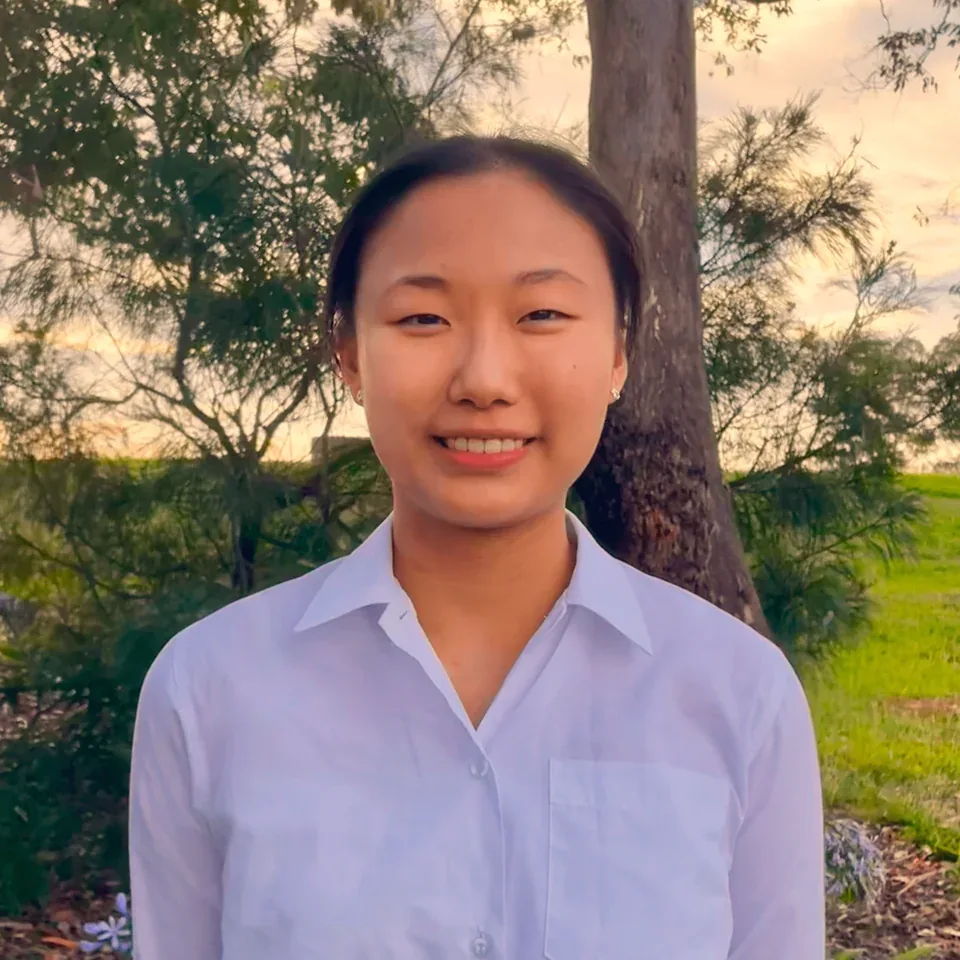
मैं भी बचपन में बहुत शर्मीला था। सवाल पूछने से डरता था क्योंकि चिंता रहती थी कि लोग क्या सोचेंगे।
विद्यार्थी कक्षा के बाद अकेले में सवाल पूछ सकते हैं या दो कक्षाओं के बीच ईमेल या मैसेज कर सकते हैं।
कक्षा में मैं हर विद्यार्थी से सवाल पूछता हूँ, ताकि सभी भाग लें।
मैं हर विद्यार्थी की प्रगति देखता हूँ ताकि कोई पीछे छूट रहा हो तो पता चले।
अगर आपको पूरी कक्षा में एक-से-एक पढ़ाई ही चाहिए, तो मैं कोई दूसरा शिक्षक ढूँढ़ने की सलाह दूँगा।
लेकिन आपके लिए कक्षा का तरीका ज़्यादा मायने रखता है या बच्चे का किसी विशेषज्ञ से सीखना? ट्यूटर बहुत हैं, मगर कितनों ने न्यू साउथ वेल्स में शीर्ष स्थान हासिल किया है? सभी मेरी तरह रासायनिक साम्य और विद्युतचुंबकत्व नहीं जानते। सभी यह भी नहीं जानते कि इन्हें कैसे समझाएँ ताकि विद्यार्थी को बात अचानक समझ आ जाए, या अंक कहाँ कटते हैं और इसे कैसे सुधारें। इसलिए हर कोई वैसा सुधार नहीं ला पाता जैसा Kirsten Chu के अंकों में 2022 में 56% से 91% तक हुआ।
क्या मेरा बच्चा समूह की रफ़्तार के साथ चल पाएगा?
कोई भी दूसरों से बहुत पीछे नहीं रहना चाहता। आपको अंदाज़ा देने के लिए, हमारे विद्यार्थी आम तौर पर औसत या उससे थोड़े कम अंकों के साथ आते हैं। वे चयन परीक्षा वाले स्कूलों (जैसे NSB, NSG और Ruse), निजी स्कूलों (जैसे Scots, St Patricks और Meriden) और बिना चयन परीक्षा वाले स्कूलों (जैसे Castle Hill और Carlingford HS) से आते हैं। हम कक्षा के बाद सवालों के जवाब देते हैं और पिछले विषयों की सामग्री उपलब्ध कराते हैं, ताकि वे समूह के साथ चल सकें।
नया विषय हमेशा बुनियाद से समझाया जाता है। पहले की कोई अवधारणा छूट गई हो, तब भी विद्यार्थी नई बात समझ सकते हैं।
अगर मेरे बच्चे के मन में सवाल हों तो?
हमारी समूह कक्षा ज़्यादातर ट्यूटरों की कक्षा से अलग चलती है। मैं अलग से समय देने के लिए तैयार हूँ। विद्यार्थी कक्षा के बाद अकेले में मुझसे पूछ सकते हैं या हफ़्ते के दौरान संपर्क कर सकते हैं। ज़रूरत हो तो मैं एक घंटा भी दे सकता हूँ।
आपकी कक्षाएँ कैसे चलती हैं?
हर हफ़्ते Zoom पर दो घंटे की एक ऑनलाइन कक्षा होती है।
कक्षा में क्या होता है?
पहले 10 मिनट की छोटी परीक्षा होती है। फिर हम एक नई अवधारणा समझाते हैं और उसे पक्का करने के लिए कुछ सवाल हल करते हैं। पूरी कक्षा में यही क्रम दोहराते हैं। परीक्षाएँ पास हों तो हम दोहराव की कक्षाएँ लेते हैं। कक्षा से पहले अभ्यास प्रश्नपत्र भेजते हैं और कक्षा में वे कठिन सवाल समझाते हैं जिन्हें विद्यार्थी पूछते हैं।
भुगतान कैसे होता है?
हम बैंक ट्रांसफ़र स्वीकार करते हैं और आम तौर पर हर स्कूल टर्म के लिए बिल भेजते हैं। अगर आप आगे पढ़ना बंद करना चाहते हैं, तो इस्तेमाल न हुई कक्षाओं की पूरी फीस वापस कर दी जाएगी।
अगर मेरी कोई कक्षा छूट जाए तो?
हम ज़ोर देकर कहते हैं कि परीक्षा की वजह से कक्षा न छोड़ें। समय कम हो तो गृहकार्य बाद में कर सकते हैं, लेकिन कक्षा में आना बेहतर है। अनुपस्थित होने पर आपको सारी सामग्री और कक्षा की रिकॉर्डिंग मिल जाएगी। उस कक्षा की फीस वापस नहीं होगी।
हाँ, स्कूल की छुट्टियों में भी कक्षाएँ सामान्य रूप से चलती हैं। छुट्टियों में हम कम समय में बहुत सारी गहन कक्षाएँ नहीं चलाते, क्योंकि वह तरीका विद्यार्थियों के लिए असरदार नहीं होता।
एक समूह में कितने विद्यार्थी होते हैं?
संख्या बदलती रहती है, लेकिन आम तौर पर करीब पाँच विद्यार्थी होते हैं।
ऑनलाइन कक्षा के लिए क्या चाहिए?
सीखने का उत्साह और एक पेन। हो सके तो इस कक्षा के लिए एक अलग कॉपी रखें। बाकी सामग्री हम भेज देंगे।
आप विद्यार्थियों को स्कूल की परीक्षाओं के लिए कैसे तैयार करते हैं?
परीक्षा में कम अंक आने की सबसे बड़ी वजह मूल अवधारणाओं को न समझ पाना है। हमारे साथ विषय पढ़ने के बाद ज़्यादातर विद्यार्थियों को यह समस्या नहीं रहती। नींव मज़बूत होने पर हम हर हफ़्ते गृहकार्य में परीक्षा जैसे सवाल देते हैं, ताकि नियमित अभ्यास हो।
परीक्षा से ठीक पहले हम पिछले सालों के स्कूल प्रश्नपत्रों का अपना संग्रह भी उपलब्ध कराते हैं। उनसे अच्छा अभ्यास होता है। परीक्षा से पहले हम कक्षा में सवाल हल करने की तकनीक भी समझाते हैं।
आप पाठ्यक्रम कब तक पूरा कर लेते हैं?
तेज़ रफ़्तार वाली कक्षाओं में हम आम तौर पर कक्षा 12 की अंतिम अभ्यास परीक्षाओं से एक टर्म पहले पूरा पाठ्यक्रम ख़त्म करते हैं। ये परीक्षाएँ टर्म 3 के दूसरे हफ़्ते में होती हैं। इससे परीक्षा के पहले करीब 7 हफ़्ते और बाद में HSC की तैयारी के लिए करीब 10 हफ़्ते मिलते हैं। हर हफ़्ते एक मॉड्यूल की परीक्षा से उसे दोहराते हैं और फिर अभ्यास प्रश्नपत्र हल करते हैं।
स्कूल की रफ़्तार वाली कक्षाएँ स्कूल के साथ चलती हैं, इसलिए HSC दोहराने के लिए करीब 6 हफ़्ते मिलते हैं।
आप पाठ्यक्रम के मॉड्यूल किस क्रम में पढ़ाते हैं?
मॉड्यूल 1 से 8 तक क्रम से पढ़ाते हैं।
लेकिन मेरा स्कूल अलग क्रम में पढ़ाता है। तब क्या होगा?
कुछ स्कूल अलग क्रम चुनते हैं। मेरे अनुभव में इससे दिक्कत नहीं होती, क्योंकि परीक्षा तक वही सामग्री पढ़ ली जाती है। सबसे अहम बात यह है कि विद्यार्थी कुछ सीखे, भले ही स्कूल का क्रम अलग हो।
आपके पास आम तौर पर किस तरह के विद्यार्थी आते हैं?
शुरुआत में आम तौर पर उनके अंक औसत या उससे थोड़े कम होते हैं। वे चयन परीक्षा वाले स्कूलों (जैसे NSB, NSG और Ruse), निजी स्कूलों (जैसे Scots, St Patricks और Meriden) और बिना चयन परीक्षा वाले स्कूलों (जैसे Castle Hill और Carlingford HS) से आते हैं।
आपका कार्यक्रम किस तरह के विद्यार्थी के लिए सही है?
सुधार इस बात पर निर्भर नहीं करता कि आप कितने होशियार हैं। सबसे ज़रूरी है कि आप मेहनत करने के लिए तैयार हों। Jade Yang और Kirsten Chu जैसे विद्यार्थियों ने अच्छा सुधार किया। उन्होंने हर हफ़्ते भौतिकी और रसायन विज्ञान पर 10 घंटे से ज़्यादा लगाए। हम आपके लिए पढ़ाई आसान बनाते हैं। अगर आप सारा गृहकार्य यानी परीक्षा का अभ्यास करते हैं और हर कक्षा में आते हैं, तो सुधार होगा।
सवाल है, क्या आप ऐसा करेंगे?
क्या आप भौतिकी और रसायन विज्ञान का ऑनलाइन ट्यूशन देते हैं?
हाँ। न्यू साउथ वेल्स के HSC की तैयारी कर रहे कक्षा 11 और 12 के विद्यार्थियों के लिए हम भौतिकी और रसायन विज्ञान के ऑनलाइन छोटे समूह चलाते हैं। भौतिकी को कभी-कभी phys लिखा जाता है, लेकिन विषय वही HSC भौतिकी है। Zoom कक्षाओं के साथ परीक्षा जैसे गृहकार्य, सवालों के विस्तृत हल और कक्षाओं के बीच एक-से-एक सहायता मिलती है।
क्या सिडनी, न्यू साउथ वेल्स के दूसरे क्षेत्रों या राज्य के बाहर से जुड़ सकते हैं?
हाँ। कक्षाएँ ऑनलाइन हैं। आप सिडनी, न्यूकैसल, वोलोंगोंग, न्यू साउथ वेल्स के दूसरे क्षेत्रों या ऑस्ट्रेलिया में कहीं से भी जुड़ सकते हैं। ट्यूशन सेंटर जाने की ज़रूरत नहीं है।
भौतिकी और रसायन विज्ञान की कक्षाएँ न्यू साउथ वेल्स के HSC के लिए हैं। अगर आप किसी दूसरे राज्य या अलग पाठ्यक्रम में पढ़ रहे हैं, तो अपनी कक्षा और विषयों की जानकारी के साथ हमसे संपर्क करें। हम देखेंगे कि कक्षाएँ आपके लिए सही हैं या नहीं। ऑनलाइन कक्षाएँ हर पाठ्यक्रम को शामिल नहीं करतीं।